
Origin Story
In 2020, Christie's London sold a rare late-15th / early-16th century Iznik plate — attributed to the reign of Sultan Mehmed II — for £5.4 million. That record confirmed, once again, the standing of Ottoman ceramic art at the very top of the global art market.
The Meaning of the Pattern
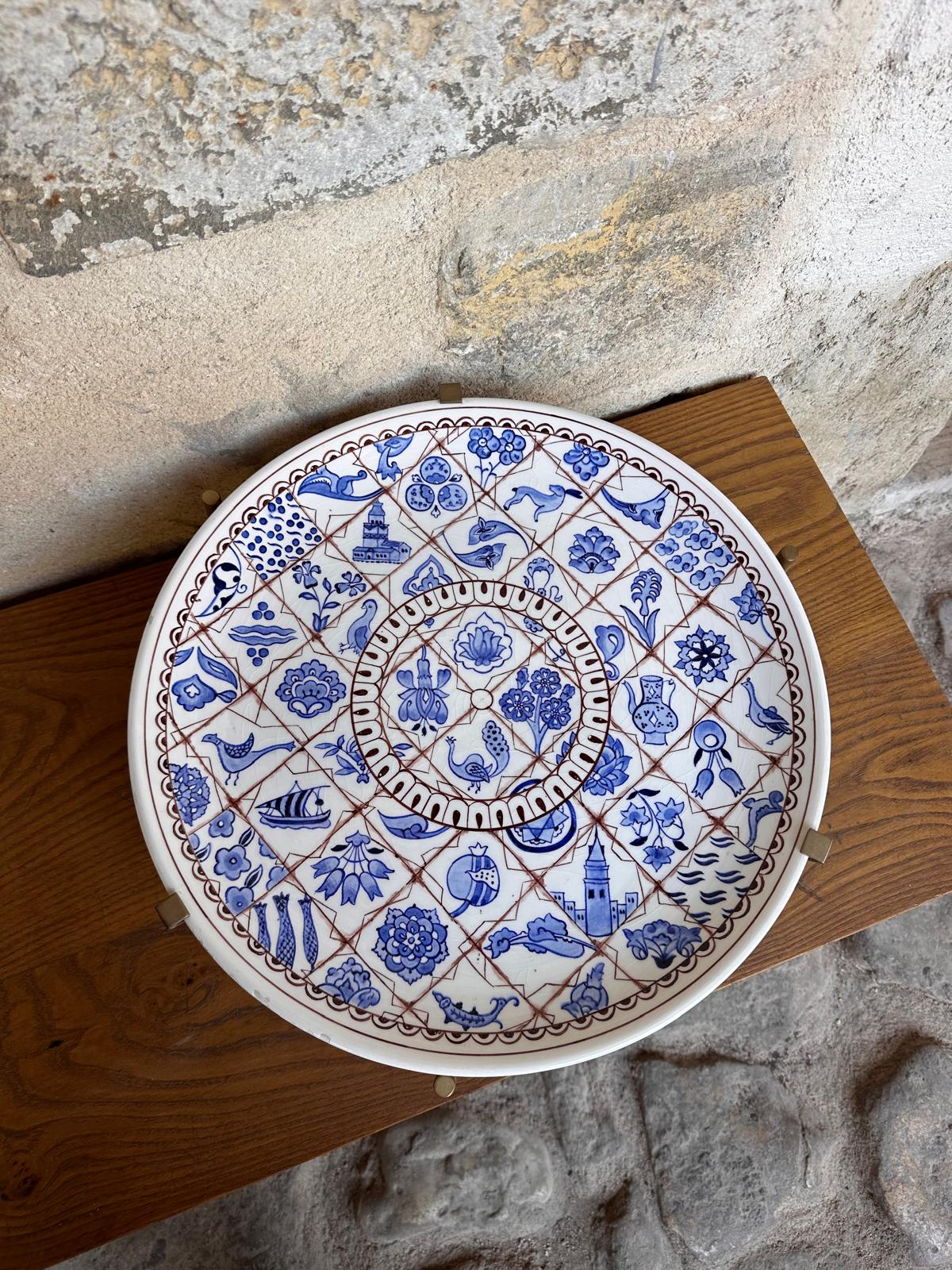
The surface of the plate carries a composition that brings together rumî decoration and the Baba Nakkaş school — the style developed by one of the founding master-painters of the Ottoman palace nakkaşhane in the 15th century. The rumî-hatayî grammar he set down gave ceramic ornament new rules that continued to live through thousands of works in the centuries to follow.
The Çini Project Interpretation
In our workshop this singular design has been carried onto a 42 cm deep wheel-thrown plate, built with traditional methods. Fidelity to the original meets the luminous surface of a high-quartz body — so the elegance of the blue-and-white palette reaches the present unhurried. The piece embodies our motto: "Reviving a heritage the world calls irreproducible."
Signatures
Design adaptation & application: Gül Camadan