
Origin Story
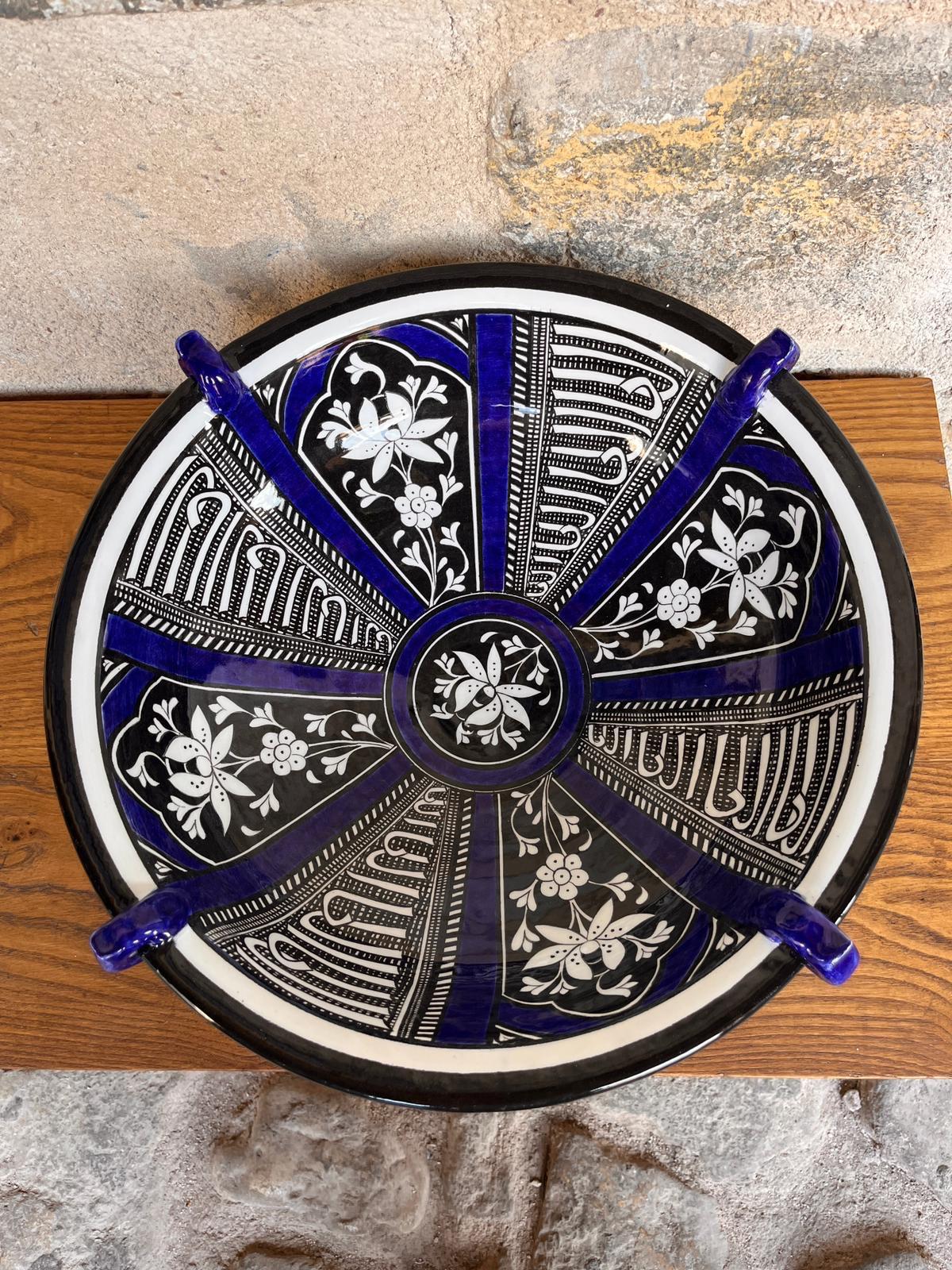
The reference for this bowl comes from the Mamluk holdings of the British Museum: a 14th century piece in which the interior sets a black ground against a disciplined botanical in white. Mamluk ceramics of the period were in dialogue with Persian, Syrian and Egyptian workshops — a shared vocabulary travelling from the Nile to the Euphrates.
The Meaning of the Pattern
The inner composition draws the eye to a single centre, then releases it along branching scrolls towards the rim. The ground is a dense black; the botanical is an uninterrupted white line. The exterior has been composed from Çini Project's own reading of other Mamluk fragments in the British Museum — a grammar of the same period rather than a copy of a single piece.
The Çini Project Interpretation
Wheel-thrown at 40 cm in diameter with two handles, the bowl is produced in a high-quartz body and painted under the glaze in the traditional sequence. The cobalt is laid so it reads alongside the black without competing; the white retains its graphic silence. The piece is meant to be read as a space, not merely as a vessel — a quiet presence on a console, a library, or a low table.
Signatures
Design adaptation & application: Özgün Yazgan